 Akumal Snorkeling
Best Time to Snorkel in Akumal: Months, Hours and the Turtle Calendar
The best time to snorkel in Akumal is early on any day except Monday, with the water at its calmest and clearest in the first sessions of the morning. Turtles feed in the bay every month of the year, so there is no sighting season to chase. What changes through the calendar is the weather, the wind, the crowds and the nesting activity on the beach at night. May to October brings nesting season, when females come ashore after dark. The dry months tend to bring calmer seas and better visibility, while the windier afternoons can stir the sand and cut visibility down. This guide breaks the answer into hours, seasons, turtle behavior, the days to avoid and the way timing affects what you pay. If you want to see how the main options stack up on price and duration, start with the Akumal snorkeling tour comparison. Then come back here and pick the slot that fits your trip.
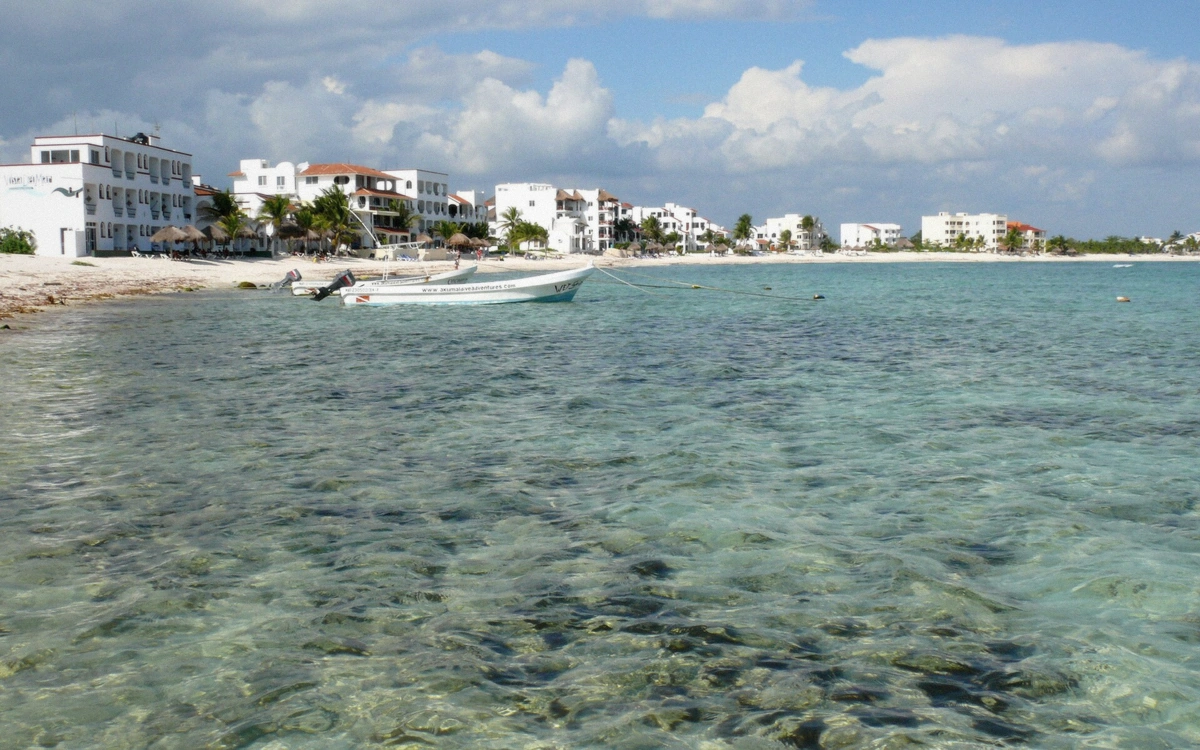
Half Moon Bay at first light, before the wind and the crowds arrive. Photo via Wikimedia Commons, public domain.
Quick answer Mornings win the water, turtles feed all year, and Mondays run the quietest
Go in the morning, ideally on the first guided session of the day, and avoid Mondays when guided sessions do not run at all. Turtles are present year round because they graze the seagrass meadows in every month, so the season matters less than the hour. Dry months usually bring calmer water and better visibility, while May to October adds nighttime nesting on the beach. Book a morning slot midweek and you will get the best combination of clear water, few people and active turtles.
Key takeaways
- Morning sessions have the calmest water and the best visibility in the bay, and akumal snorkeling without guide works in the buoyed free zone if you prefer your own pace.
- Guided sessions run 9 am to 5 pm and never on Mondays, so a Tuesday morning is the sweet spot for a VIP turtle swim + GoPro.
- On windy days, yal ku lagoon snorkeling is the wave-free fallback at Akumal's north end.
The Quick Answer: When to Go
Here is the short version before the detail. Akumal Bay works in every month of the year. The turtles do not leave.
Three species feed on the seagrass meadows here, and they graze in January just as they do in July. So the real question is not when the turtles show up but when the conditions and the crowds work in your favor.
Two variables decide the quality of a swim. The first is the hour. The bay sits on the Mesoamerican Barrier Reef System, the second-longest reef in the world, and morning brings the calmest water and the clearest visibility.
Afternoon boat traffic stirs the sand and the water turns cloudy. The second variable is the day. Commercial guided sessions run 9 am to 5 pm and do not run on Mondays, which makes Monday the single worst day to plan a guided swim.
Put together, the winning formula is simple. Pick a Tuesday, Wednesday or Thursday. Aim for a morning slot close to 9 am.
Bring a life jacket, because it is mandatory in the guided zone. Skip the harmful sunscreens, which are banned in the bay. If the wind picks up, move to Yal-Ku lagoon at the north end of Akumal, which stays wave-free.
A note on what best actually buys you at Akumal: the turtles are near-certain in every month and every decent hour, the variables you are really choosing between are water clarity, wind, crowd density and price. Morning slots cost the same as afternoon ones and deliver the best version of all four, which is why every other recommendation on this page collapses into one instruction, book early, then pick your month for the crowds and weather you enjoy.
High season runs roughly December to April, and the bay is busiest then: the beach club fills early, the parking lot turns over by mid-morning, and the guided slots go first. The operator of the most-booked swim even nudges its own customers toward the 11:00 AM to 1:00 PM window as the least crowded of the midday slots, a rare case of an operator publishing crowd data. In the low season the same water runs emptier, and the morning rule does the rest.
Soft sunrise over a calm shallow Caribbean bay with glassy water and one small boat Illustrative image.
Best Time of Day: Why Mornings Win in Akumal Bay
Akumal Bay has a daily rhythm and it favors early risers. The reasons are physical and practical, and they stack in the same direction.
Water conditions by the hour
Morning has the calmest water and the best visibility in the bay. Wind tends to build through the day on the Caribbean coast, and surface chop pushes sediment into the water column. By mid-afternoon, boat traffic in and out of the bay has also stirred the sand near the entry points.
A turtle that is easy to spot at 9 am can be a shadow at 3 pm. If photography matters to you, this alone settles the argument for a morning slot.
Crowds and access
The bay is a public beach and it fills up as the day goes on. Since March 2016 it has been a marine protected area, and buoys split the water into rehabilitation zones where swimming is not allowed, a guided-only turtle circuit, and open zones anyone may swim. The guided-only circuit means everyone who wants to swim with the turtles inside that zone moves through the same sessions.
Commercial guided sessions run 9 am to 5 pm, one guide takes at most 6 swimmers, and one session lasts at most 55 minutes. Early sessions start with empty water. Later sessions share the circuit with everyone who arrived that day.
Rules that shape your timing
A life jacket is mandatory in the guided zone, and the guide sets the pace for the full session. Harmful sunscreens are banned in the bay, so plan to switch to a reef-safe option or skip sunscreen on your skin under the suit. If you would rather swim on your own schedule, free unguided snorkeling is allowed in the buoyed free zone near the sign that explains the rules.
That zone has no turtles circuit access, but it costs nothing and it stays open whenever the beach is open.
- Arrive before 9 am to catch the first guided sessions and the calmest water.
- Avoid the early afternoon block, when boat traffic has stirred the sand.
- Keep Yal-Ku lagoon as a backup. It is brackish, wave-free and open daily 9 am to 5 pm.
- Bring a life jacket for any guided-zone swim and leave harmful sunscreen at home.
The Turtle Calendar: What Season You Will Actually See
The biggest misconception about Akumal is that turtles arrive in a season. They do not. Green turtles, the everyday sighting here, graze the seagrass meadows year round.
Loggerhead and hawksbill turtles also feed in the bay. The name itself gives the game away, since Akumal means place of the turtles in Mayan.
Year-round feeding
Because the turtles live in the bay rather than passing through it, a visit in February has roughly the same chance of a sighting as a visit in August. What varies is not whether you will see a turtle but what else the calendar adds. Water temperature, wind and crowd levels shift through the year, and those factors change how pleasant the swim feels.
Nesting season, May to October
May to October is nesting season, and it changes the beach rather than the water. Turtles come ashore at night to lay eggs. You will not see nesting on a morning snorkel, but a trip in these months can pair a daytime swim with an evening walk where nesting activity happens.
If seeing a female on the sand matters to you, plan for the second half of the year. If you only care about the water, ignore the calendar and pick your month on weather and price.
Which species you are likely to meet
Green turtles are the everyday sighting and the reason the bay is protected. Loggerhead and hawksbill turtles appear as well, though the green turtle dominates the seagrass meadows. All three graze in the guided turtle circuit, which is exactly why the circuit is guided-only and capped at 6 swimmers per guide.
The cap protects the animals and keeps the session calm.
Nesting season runs from May into October, the cycle Centro Ecológico Akumal monitors and protects, and it changes the beach at night rather than the water in the day. Female turtles come ashore after dark to lay, the nests hatch roughly two months later, and the bay's conservation teams mark and monitor both. Swimmers in the water on a hatching night may see the boil of newborns heading for the surf from a respectful distance, and the rules ask you to let them run their own race, no lights, no handling.
For daylight swimming the calendar matters less than the weather forecast: the resident greens feed on the same meadows in January and July alike. The season you choose sets the crowd level and the wind pattern more than the sighting odds, which is why the month-by-month chart reads in terms of comfort rather than turtles.
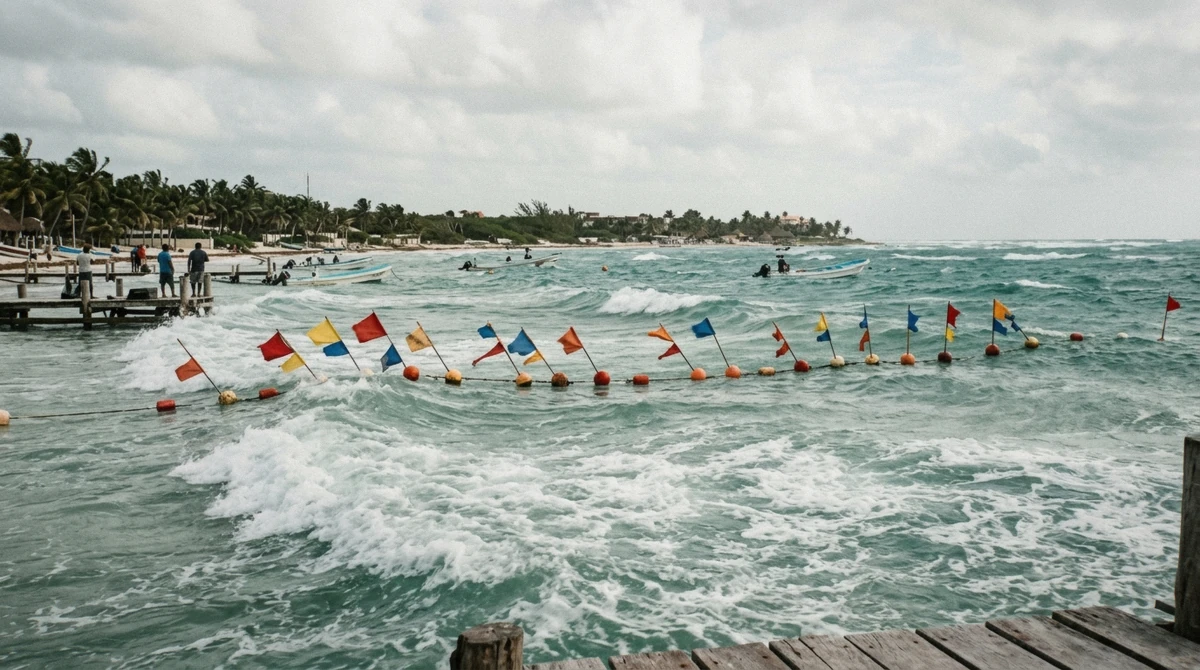
Choppy whitecaps on a shallow Caribbean bay with wind streaks and a flagsnapping buoy line Illustrative image.
Month-by-Month: Weather, Wind and Water in Akumal
Akumal sits on the Riviera Maya coast of Quintana Roo, about 30 minutes south of Playa del Carmen and 20 minutes north of Tulum, on highway 307. The Caribbean climate here splits into a drier stretch with calmer seas and a wetter, windier stretch. The source material for this guide does not give month-by-month rainfall or temperature figures, so treat this section as a pattern guide rather than a forecast.
The dry, calm stretch
The calmer months tend to deliver the best visibility in the bay, and that is when the morning advantage matters least because even afternoons stay reasonably clear. These are the easiest months for first-time snorkelers and for kids. The water is warm enough to swim in a light layer all year on this coast, and the beach-club day fee runs about 100 pesos with restrooms, showers and lockers, so a full day at the bay is inexpensive in any month.
The windier, wetter stretch
When wind picks up, visibility in the bay drops and the surface turns choppy. This does not close the bay, but it changes where you should swim. Yal-Ku lagoon at Akumal's north end is the calm-water fallback.
It is brackish, wave-free and open daily 9 am to 5 pm, with a sculpture garden along the shore and discounted rates for Quintana Roo residents. A windy morning in the bay can still be a great day if you shift to the lagoon after lunch.
Nesting months in practice
May to October overlaps with the warmer, wetter part of the year. For a snorkeler the water stays completely usable, and the bonus is the nighttime nesting on the beach. Families often find this stretch rewarding because a single trip covers both the reef swim and the nesting story.
Crowds at the bay itself follow the holiday calendars more than the weather, which is the subject of the breakdown below.
Days and Weeks to Avoid: Mondays, Weekends and Holidays
The calendar matters more than the month when it comes to crowds. Three patterns repeat every week and every year.
Mondays
This is the hard rule. Commercial guided sessions do not run on Mondays. If you show up at the bay on a Monday expecting to join a turtle session in the guided circuit, there is nothing to join.
Your options on a Monday are the free unguided zone near the rules sign or a trip to Yal-Ku lagoon, which opens daily. Every other day of the week runs the full 9 am to 5 pm session schedule.
Weekends
The bay is a public beach, and weekend traffic from Playa del Carmen and Tulum fills the parking and the sand. Parking at the bay costs 100 MXN per day. Weekend sessions still run, but the guided-only circuit carries more swimmers per hour and the entry line grows.
A Tuesday or Wednesday morning gives you the same turtles with a fraction of the people.
- Mondays have no guided sessions at all. Plan around them.
- Midweek mornings have the lightest crowds on the circuit and in the free zone.
- Public holidays bring peak beach traffic, so shift to an early slot or the lagoon.
- Long weekends combine the worst of both patterns. Book ahead and arrive before 9 am.
Mondays deserve a paragraph of their own because they flip the bay's rhythm: the commercial guided sessions rest, so the tour groups thin out, the beach-club fills more slowly and the free zone reads quietest. Travellers who prefer an unguided swim should aim for the day, while swimmers set on a licensed session should plan around it.
Weekends bring Mexican and Cancun day-trippers through the high season, and the Christmas-to-New-Year and Easter weeks are the bay's absolute peaks, with parking full by mid-morning. Spring break scatters extra crowds through March. None of it closes the water, it just moves the arithmetic toward the earliest slot you can book.
Booking the Right Slot: The Price Comparison by Hour
Timing affects more than visibility. It decides which listings you can book, how much you pay and how much of the day the trip eats. The comparison covers six listings in the catalog, from a short bay session to full-day combos that add Tulum and a cenote.
All prices are per person from-prices, and every listing offers free cancellation up to 24 hours before the start plus reserve-now-pay-later checkout. Figures current for Q3 2026. Figures current for Q3 2026
| Listing | From-price | Duration | Rating |
|---|---|---|---|
| VIP turtle swim + GoPro | $44 | 1 hour 30 minutes | 4.6 |
| Tsuuk park turtle snorkel | $38 | 1 hour 30 minutes | 4.8 |
| Small-group VIP snorkel | $35 | 1 hour 30 minutes | 4.9 |
| Tulum + cenote combo | $118 | 8 hours | 4.6 |
| Cancun full-day combo | $118 | 10 hours | 4.5 |
| Tulum reef boat | $20 | About 2 hours on the water, ticket valid 7 days | 4.3 |
Short sessions for a morning slot
The three bay-focused listings all run about an hour and a half, which fits neatly into the calm morning window. The Small-group VIP snorkel is the cheapest of the three at $35 and carries a 4.9 rating across 13 reviews. The Tsuuk park turtle snorkel costs $38 and holds a 4.8 rating across 38 reviews, and it is the catalog's own pick.
The VIP turtle swim + GoPro adds a camera to the swim for $44 with a 4.6 rating across 385 reviews, the deepest review base of the three.
Full-day combos and the real cost
The two coach combos both start from $118 but they fill different parts of the calendar. The Tulum + cenote combo runs 8 hours and suits a morning start from the Riviera Maya. The Cancun full-day combo runs 10 hours and makes sense when you are based further north.
Both collect eco-fees at boarding, $40 per adult and $25 per child, on top of the from-price, so budget for that when you compare. A cheaper water-only alternative is the Tulum reef boat at $20 for about 2 hours on the water with a ticket valid 7 days, rated 4.3 across 10 reviews.
Where timing saves you money
Booking a midweek morning gives you the widest choice of short sessions and the calmest water for the same price as a weekend slot. Free cancellation up to 24 hours before the start means you can lock in a morning session early and shift it if the wind forecast turns. Reserve-now-pay-later checkout removes the upfront risk entirely.
For families weighing a bay session against a full day, akumal snorkeling with kids covers the practical differences, and Akumal snorkeling tours compared side by side keeps the full picture in one table.
Price moves with the calendar less than you would expect, which is unusual for the Riviera Maya. The bay sessions hold their from-prices across the week and most of the year, the platforms adjust by date and demand at the margins, and the walk-up rates asked on the sand run higher than the online from-prices. The practical rule: the slot you book matters more than the money you chase, because the morning sessions sell out first in every season, and the free-cancellation window lets you hold the early slot while your plans settle.
The shore-side sellers add one more layer. Guides cost a fraction of the platform prices on the beach, the same swim sells for 350 to 550 pesos at the gate, so travellers with flexible days and small budgets book online only when the morning slots matter. The online from-prices buy the morning inventory and the cancellation window, and both are worth the difference in high season.
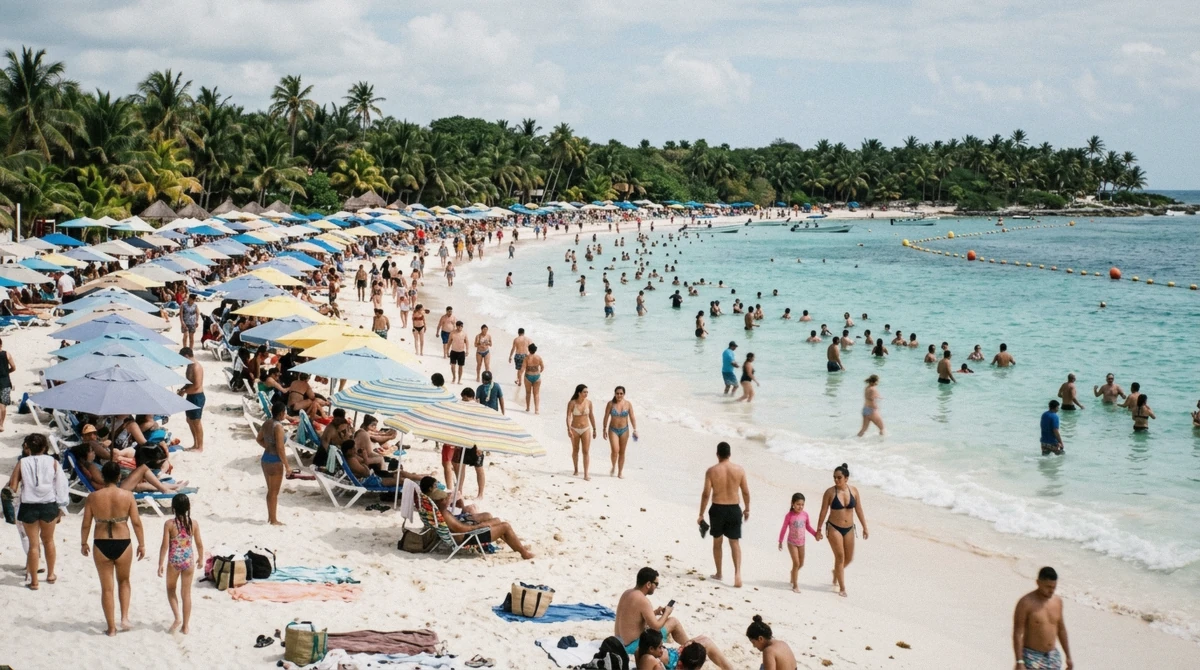
Busy beach day on a Caribbean bay with rows of umbrellas and swimmers wading to a buoy line Illustrative image.
Frequently Asked Questions
When can I see turtles in Akumal?
Every month of the year. Green, loggerhead and hawksbill turtles graze the seagrass meadows in the bay year round, so there is no sighting season. May to October adds nesting, when females come ashore on the beach at night.
What time of day is best for snorkeling in Akumal?
Morning, ideally the first sessions after 9 am. Morning has the calmest water and the best visibility, while afternoon boat traffic stirs the sand. Guided sessions run 9 am to 5 pm and do not run on Mondays, so a weekday morning is the strongest slot.
What month are turtles most active in Akumal?
The bay's turtles feed year round, so no single month is more active in the water. The calendar does add something between May and October, which is nesting season, when turtles come ashore at night. For a swim, pick your month on weather and crowds instead.
Is Akumal snorkeling good in summer?
Yes. Turtles are present all year and summer overlaps with nesting season, so you get the water plus the chance of nighttime beach activity. Watch the wind, because choppier days cut visibility, and shift to Yal-Ku lagoon, which is wave-free and open daily 9 am to 5 pm, when the bay turns rough.
Which is better, Tulum or Akumal?
Akumal is the better choice for swimming with turtles, since the bay is a protected turtle habitat with a guided circuit. Tulum is stronger on ruins and beach scenery. If you want both in one day, the Tulum + cenote combo pairs them in an 8-hour trip.